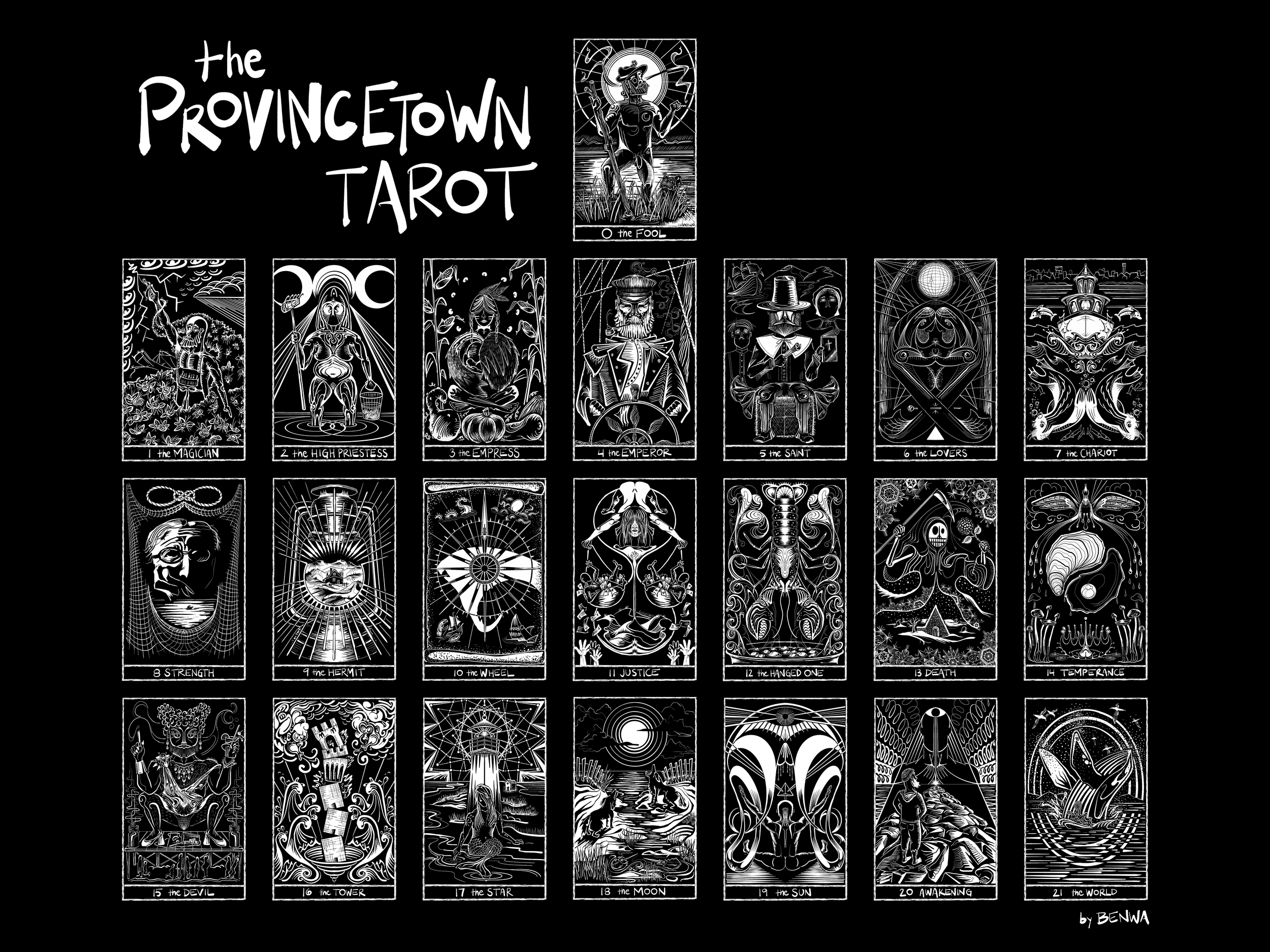
The Major Arcana
The Major Arcana tells the story of the Fool’s Journey towards enlightenment and spiritual fulfillment. It depicts major milestones in one’s life as they evolve, suffer, and thrive, learning to access and ultimately merge the Sacred Masculine and Feminine.
Below are some examples from the Major Arcana.
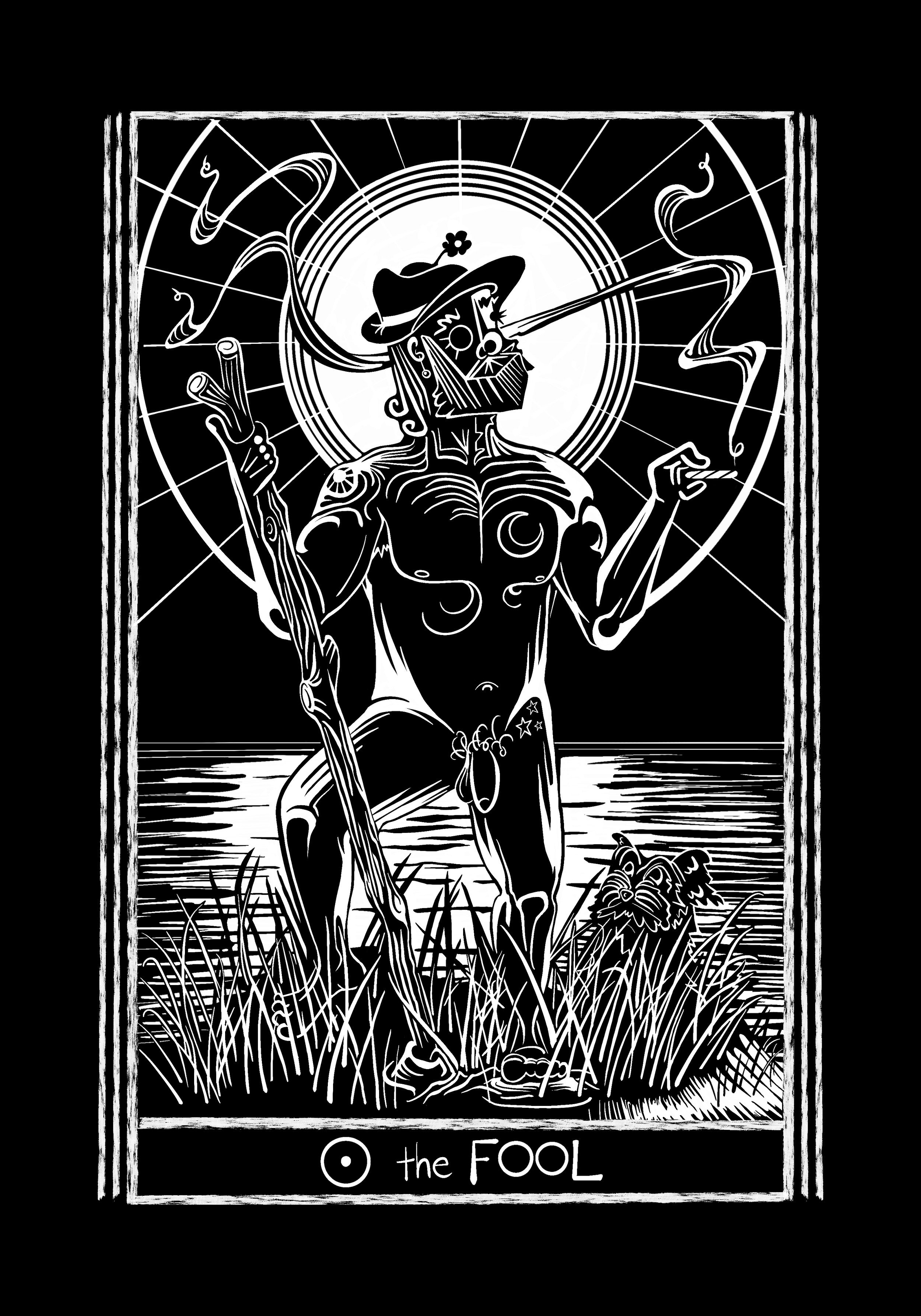
The Fool
0
The Fool is the eternal traveler of the tarot, stepping forward into the unknown with openness, curiosity, and trust. Represented by the non-number zero, the Fool represents limitless potential: the void before creation, the seed before growth, the moment before transformation begins. Though often naïve, the Fool’s willingness to embrace uncertainty is precisely what allows the journey to unfold.
In this card, the artist depicts himself naked on Boy Beach, the unofficial gay nude stretch of Herring Cove in Provincetown. Vulnerable, uninhibited, and suspended between land, sea, and sky, he embodies the Fool’s spirit of surrender to experience. The image marks the beginning of both the tarot journey and the ambitious undertaking of creating an entire deck devoted to Provincetown’s layered history, mythology, and culture.
The Fool reminds us that every meaningful transformation begins with uncertainty. To step into the unknown requires faith: the path may not be easy, but it will lead us where we are meant to be.
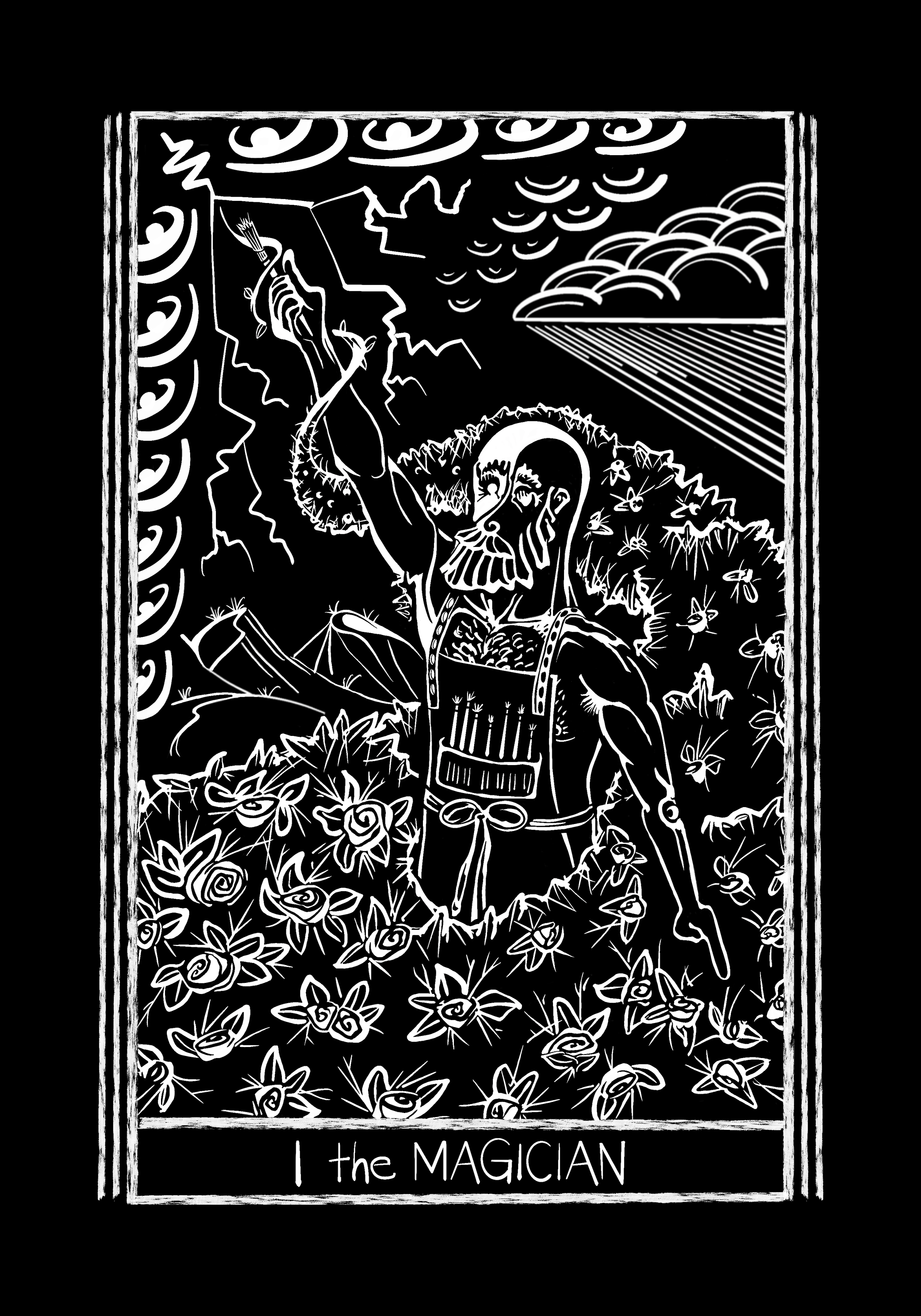
The Magician
I
The Magician is the great initiator of the tarot: the force that transforms inspiration into reality through focused intention and action. Acting as a conduit between the spiritual and material worlds, the Magician channels the elemental energies of fire, water, air, and earth into creation. This card speaks to personal power, resourcefulness, and the ability to shape one’s reality through vision and disciplined effort.
Here, the Magician appears as an artist painting within the Province Lands. Inspired by contemporary Provincetown artists Peter Hocking and Mark Adams, the figure commands the surrounding natural elements through alchemical creation. His brush becomes the Magician’s wand, channeling imagination directly into the landscape itself.
As beach roses bloom from the dunes beneath his gesture, the card illustrates the Magician’s essential lesson: that creativity is a transformative force capable of bringing entirely new worlds into being.
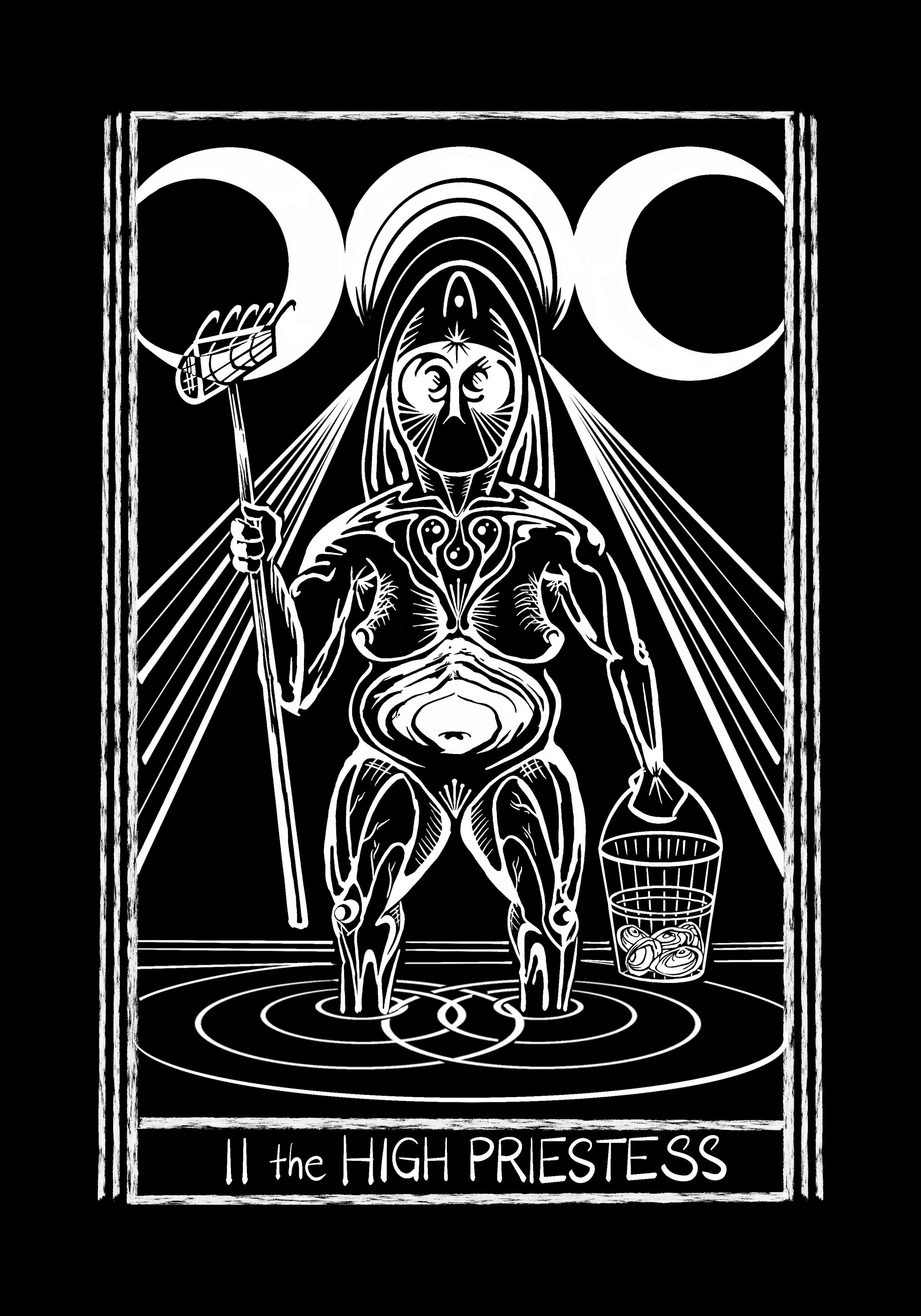
The High Priestess
II
The High Priestess governs the hidden realms: intuition, dreams, secrets, and subconscious knowing. Where the Magician directs outward action and manifestation, the High Priestess invites stillness, receptivity, and trust in unseen truths. She reminds us that not all wisdom arrives through logic; some knowledge must be felt rather than explained.
This card depicts a woman clamming in the tidal flats of Provincetown. She stands ankle-deep in water: a traditional tarot symbol for the subconscious mind. Beneath its surface lie hidden emotions, instincts, and truths, represented here by the buried clams she gathers in her basket. Her rake becomes a tool of revelation, drawing what is concealed into awareness.
Above her shines the three-phase moon, symbolizing the sacred feminine cycle of Maiden, Mother, and Crone. The rippling water forms a vesica piscis, an ancient symbol associated with femininity, creation, and the threshold between worlds. The High Priestess encourages us to move inward, listen carefully, and trust the quiet wisdom already residing beneath the surface.
IV
The Emperor
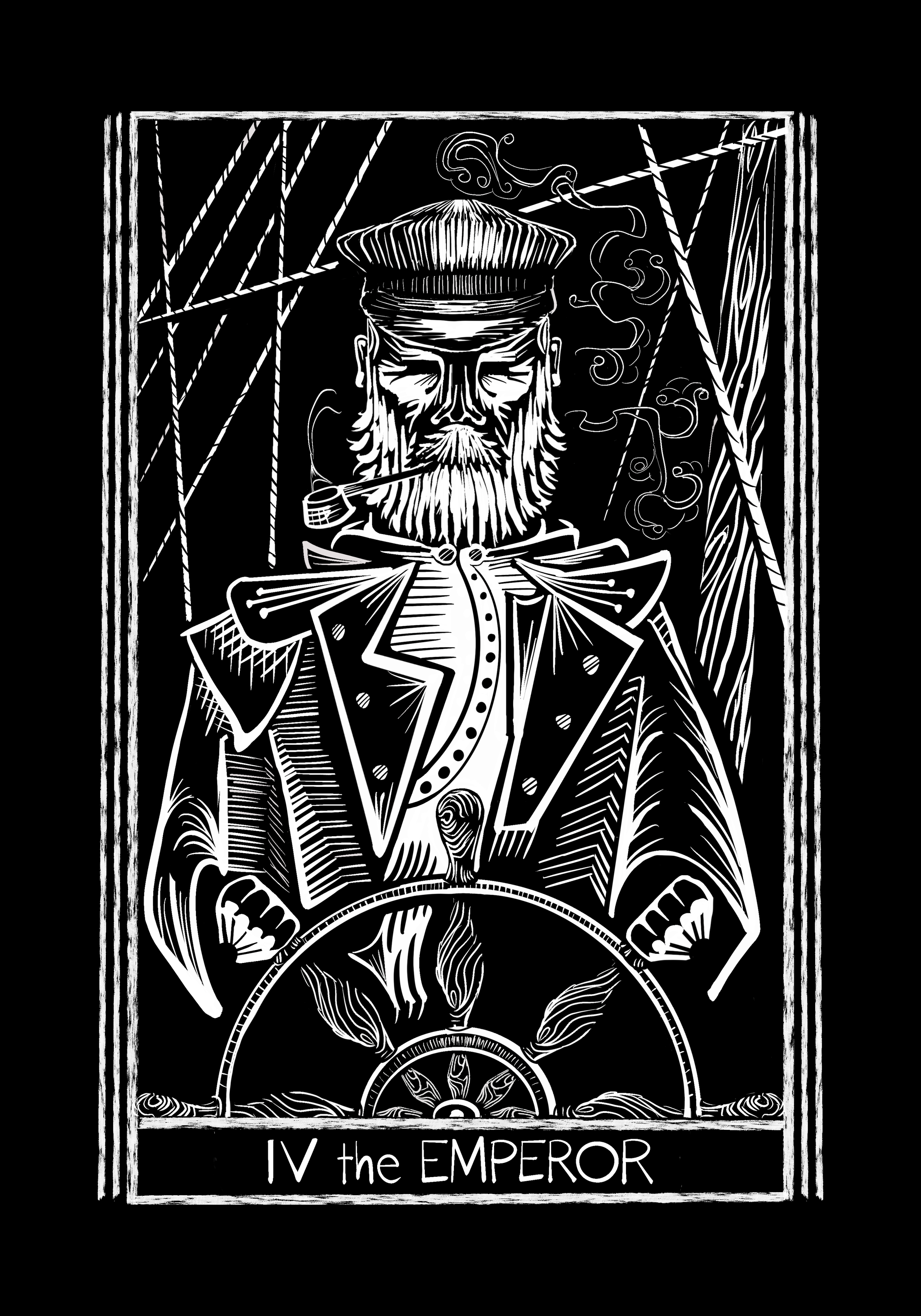
Who’s your Daddy? The Emperor is the paternal archetype of structure, leadership, and protection. As complement to the nurturing abundance of the Empress, he represents order imposed upon chaos through discipline, wisdom, and experience. This card speaks to responsibility, boundaries, and the steady authority required to guide others through uncertainty.
Here, the Emperor appears as the wizened captain of a nineteenth-century whaling ship. During the height of Provincetown's whaling boom, captains commanded vessels on voyages that could last months or even years, navigating treacherous waters and managing crews through danger, isolation, and exhaustion. Their authority demanded both practical skill and psychological endurance.
Gazing upon the open sea as he grips the helm, the captain embodies the Emperor’s steadying force: a figure whose discipline and resolve bring order to an unpredictable world. The card reminds us that true authority is earned not through domination, but through experience, responsibility, and the ability to lead others safely through chaos.
VI
The Lovers
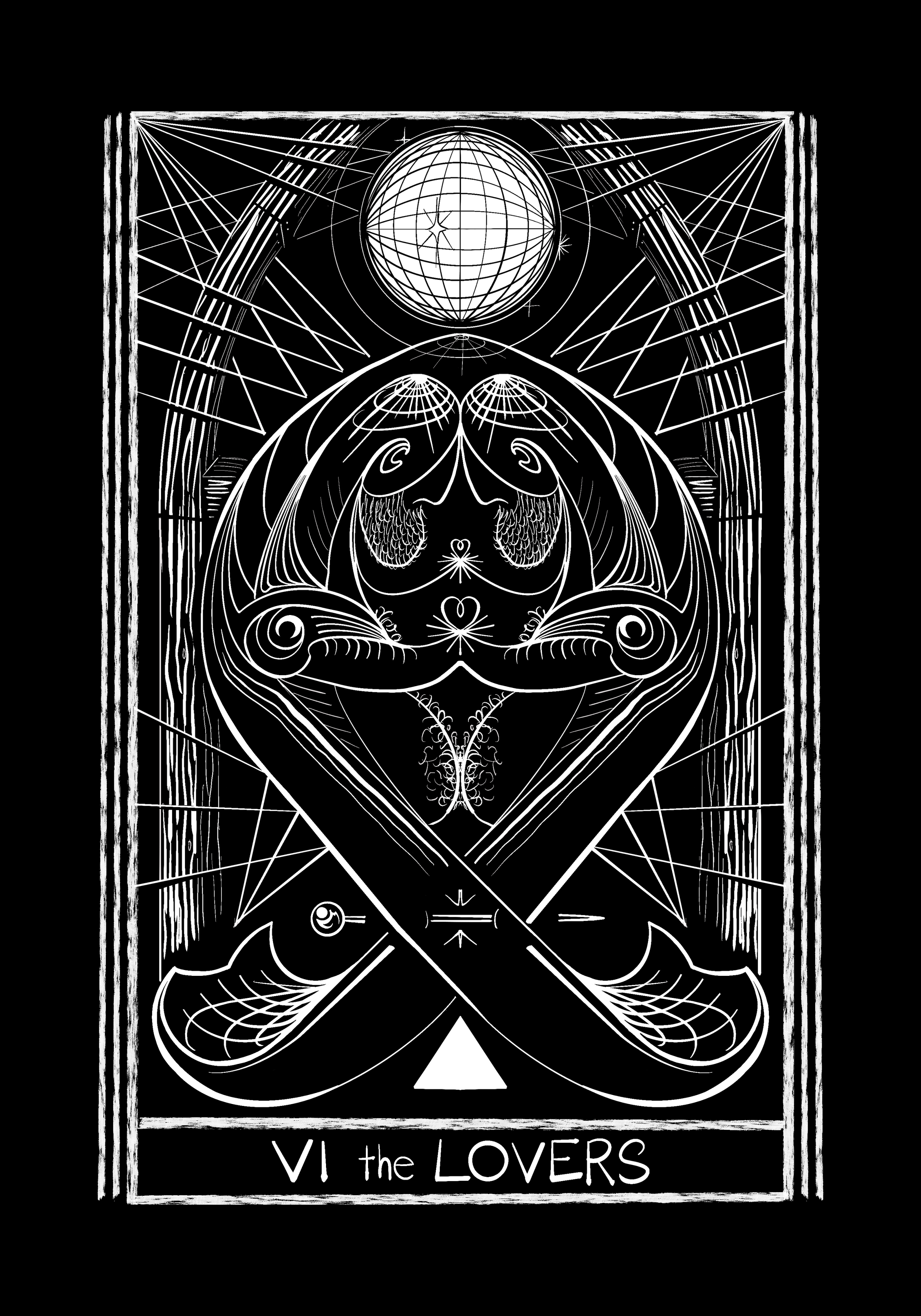
The Lovers speaks to deep connection, vulnerability, and emotional honesty, but also to conscious choice. This card asks us to decide what we value most and to live in alignment with those truths. Love here is not passive romance alone, but an act of commitment, courage, and personal autonomy.
This card is set inside the Atlantic House, Provincetown’s legendary “A-House,” widely recognized as one of the nation’s oldest gay bars. Two “bears” dance head-to-head beneath its historic wooden beams, while overhead the disco ball serves as silent witness to generations of desire, celebration, heartbreak, and liberation.
The figures are bound together by an awareness ribbon, acknowledging the profound impact of the AIDS epidemic upon Provincetown. The crisis devastated the community while simultaneously forging extraordinary bonds of care, activism, and chosen family. Beneath them appears the upright triangle associated with ACT UP (a vital AIDS activism organization), symbolizing the urgency, resistance, and collective courage that emerged from that era. The Lovers reminds us that love is ultimately a choice: to connect, to care, and to live authentically despite fear.
IX
The Hermit
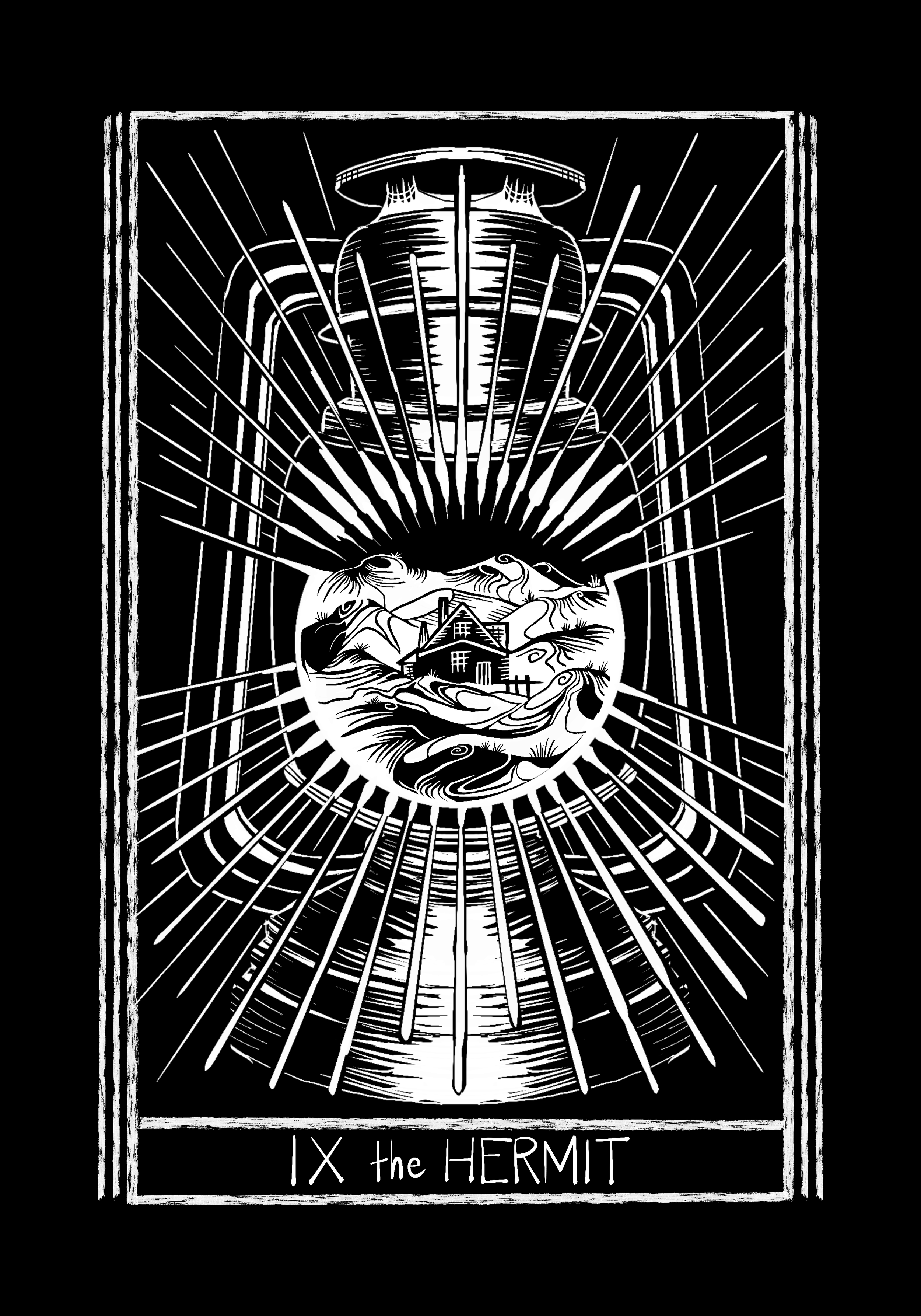
The Hermit represents withdrawal from distraction in pursuit of wisdom, clarity, and deeper self-understanding. This card speaks to introspection, contemplation, and the courage to step away from society’s noise in order to hear one’s inner truth more clearly. Carrying only a lantern to illuminate the darkness ahead, the Hermit reminds us that solitude can be transformative when embraced intentionally.
This card is inspired by the legendary Dune Shacks of Provincetown, the isolated structures scattered across the remote Province Lands. Originally built in the nineteenth century by fishermen and lifesaving crews, the shacks later became sanctuaries for artists and writers including Eugene O'Neill, Jackson Pollock, Norman Mailer, and “Poet of the Dunes” Harry Kemp. Harsh, beautiful, and entirely off-grid, they offered generations of seekers a place of profound retreat and creative revelation.
The dune shacks embody the Hermit’s essential lesson: that stepping away from comfort and convention can illuminate entirely new ways of seeing oneself and the world. Their continued existence remains a testament to the enduring human need for solitude, reflection, and spiritual refuge.
X
The Wheel
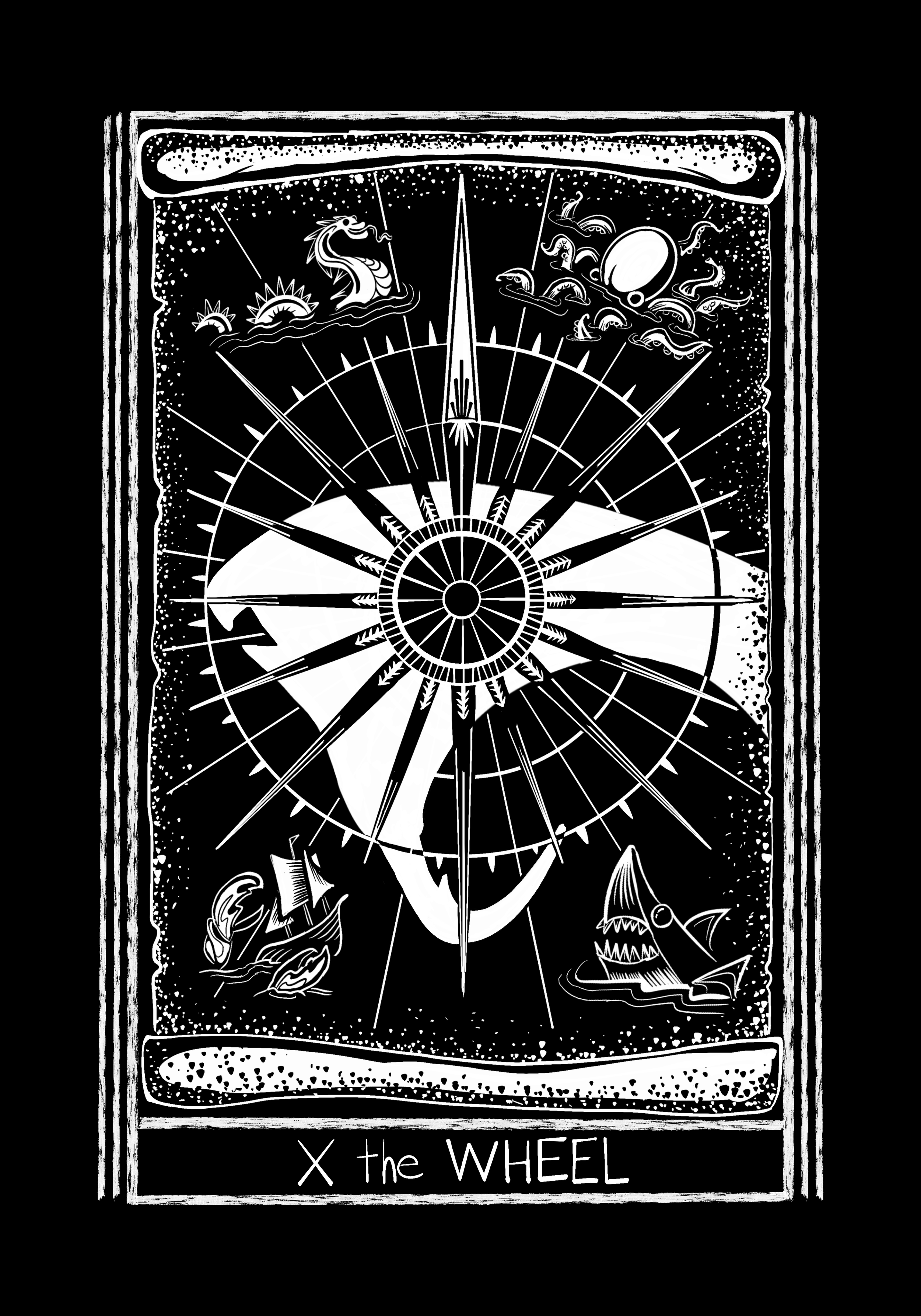
The Wheel reminds us that change is life’s only constant. Circumstances rise and fall, fortunes shift unexpectedly, and no season lasts forever. The Wheel asks us to remain adaptable through both abundance and hardship, trusting that every phase eventually gives way to another.
Provincetown sits upon a sandy vortex: a spiraling confluence of land, sea, and sky that draws people in and, at times, spits them right back out. For centuries it has offered safe harbor amid the dangerous sandbars of the Outer Cape, while simultaneously reshaping the lives of all who arrive upon its shores. Many come seeking reinvention, refuge, freedom, or escape, only to find themselves transformed in unexpected ways.
The Wheel speaks to Provincetown’s continual cycles of transformation. For the Indigenous inhabitants of Cape Cod, the arrival of the Mayflower marked a devastating turning point. Today, the town faces another as it grapples with climate change, runaway capitalism, and questions of long-term sustainability. The Wheel reminds us that change is inevitable; survival depends upon our ability to adapt and evolve with it.
XII
The Hanged One
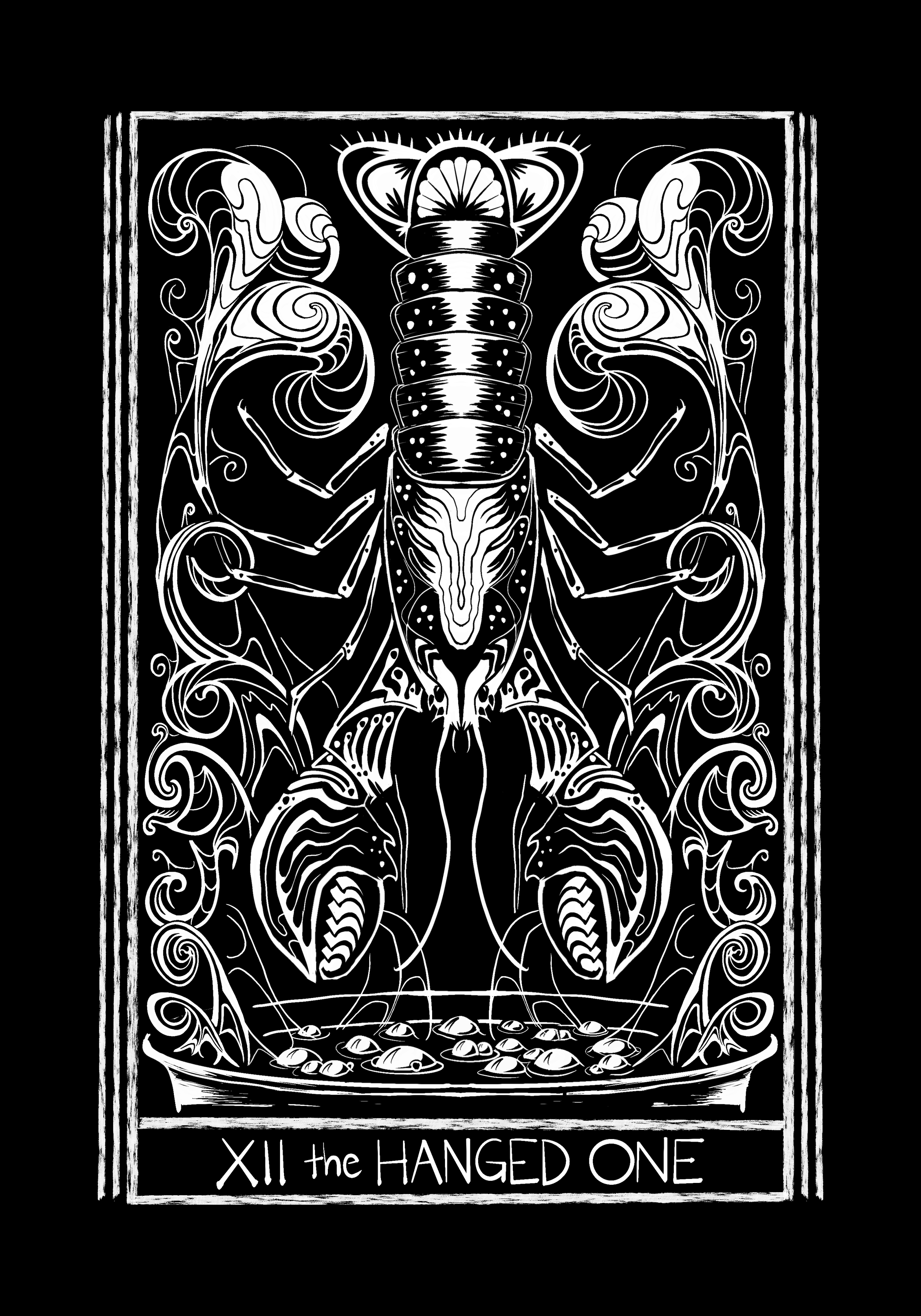
The Hanged One asks us to pause, release control, and see our lives from a different angle. Whether chosen willingly or forced upon us by circumstance, periods of suspension can reveal truths we were too distracted to notice while rushing forward. This card encourages reflection, patience, and the reassessment of values, habits, and desires that may no longer serve us.
Provincetown’s iconic Lobster Pot restaurant opened in 1943. Here, in huge tanks, captured lobsters exist in a strange liminal state: suspended between freedom and capture, motion and stillness. Removed from their natural environment and caught in temporary stasis, they evoke the uncomfortable but transformative pause embodied by the Hanged One.
This card asks us: what becomes visible when movement stops? Sometimes growth requires surrendering momentum long enough to reconsider the direction in which we are headed.
XIV
Temperance
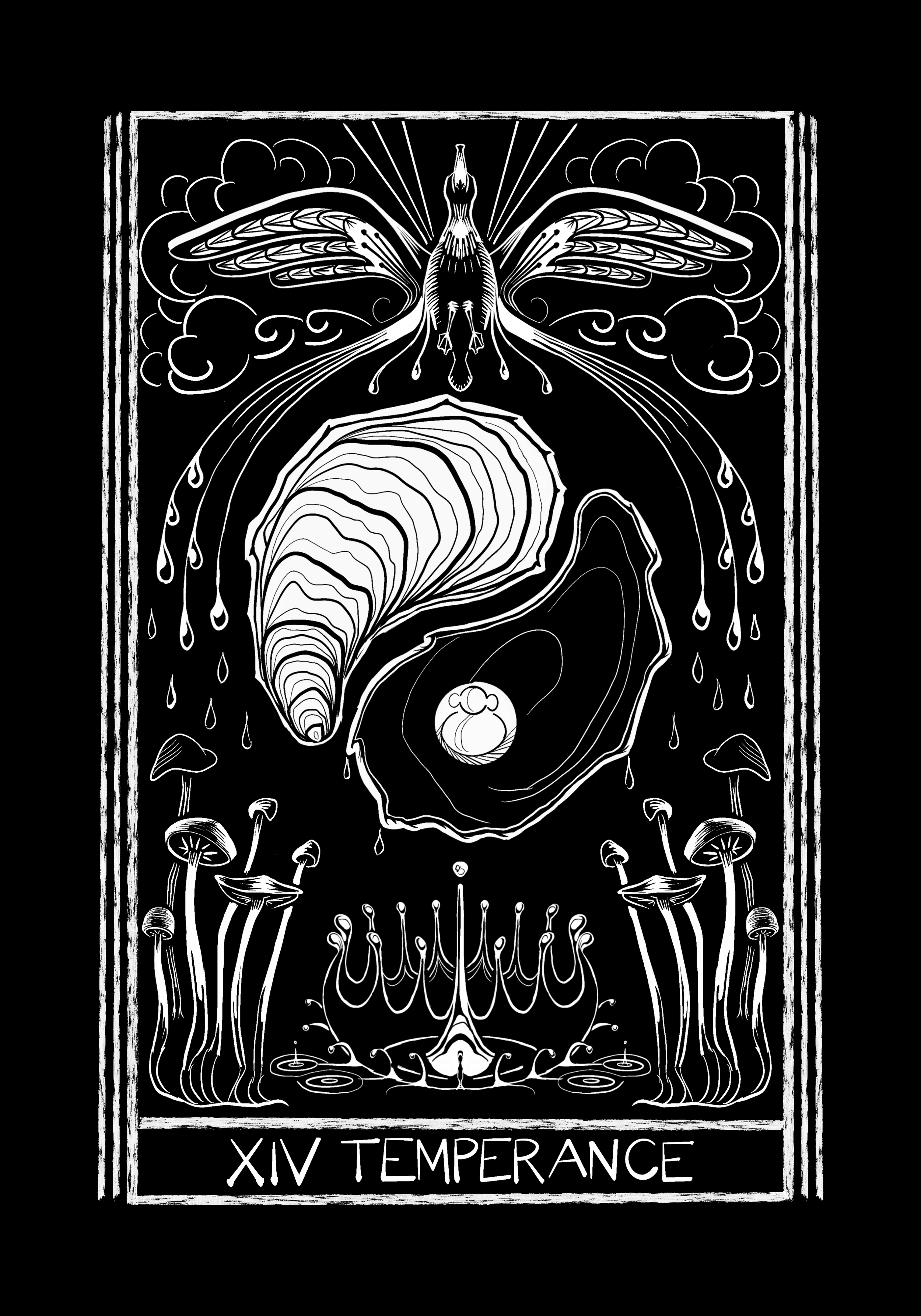
Temperance is a card of moderation, patience, and the careful blending of opposing forces into something greater and more harmonious. Rather than swinging toward extremes, this card encourages balance, restraint, and thoughtful integration. It reminds us that true transformation often happens gradually, through steady calibration and the willingness to hold multiple truths at once.
A significant part of Provincetown’s magic lies in the harmony of its delicate ecosystems, where land, sea, and sky exist in continual dialogue. Here, a cormorant represents the air, an oyster the water, and mushrooms the earth: distinct forms of life participating in an intricate cycle of exchange, decay, nourishment, and renewal.
The oyster evokes the Taoist yin-yang, symbolizing equilibrium between opposing energies, while its hidden pearl speaks to the quiet rewards of patience. The mushrooms further emphasize Temperance’s alchemical nature, transforming death and decomposition into new life. Together, these elements reflect the card’s deeper lesson: harmony is not passive, but an active and ongoing process of balance and transformation.
XV
The Devil
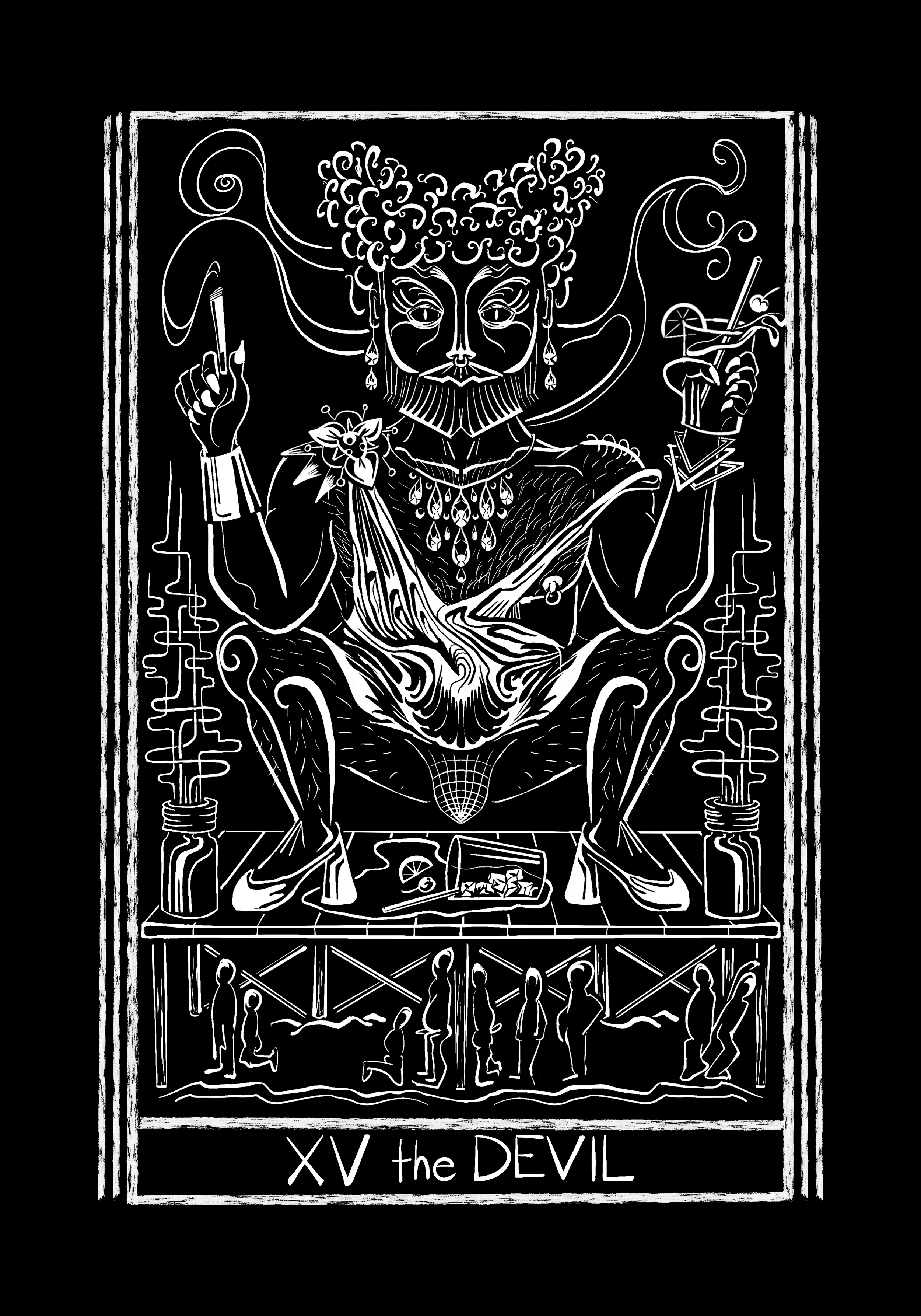
Wouldst thou like to live deliciously? The Devil represents temptation, indulgence, and the seductive pull of excess. This card speaks to the pleasures and distractions that can liberate us briefly while also threatening to consume us entirely. Addiction, obsession, vanity, and escapism all live within the Devil’s domain, but so too does uninhibited joy, erotic freedom, and the ecstatic release of abandoning shame. The challenge lies not in denying desire, but in recognizing when desire begins to control us.
A seasonal playground built upon fantasy and reinvention, Provincetown has long embraced indulgence in all its forms. The Boatslip Resort’s legendary Tea Dance is a daily spectacle of flirtation, performance, intoxication, and queer revelry, where beauty, chaos, and abandon intermingle beneath the afternoon sun.
This card depicts a Tea Dance queen in full delirious glamour: frock askew, cigarette burning, Planter’s Punch spilling across the boards as poppers fumes rise around him. Beneath the deck, the infamous Dick Dock churns with clandestine desire. The Devil reminds us that pleasure can be transcendent, but also asks: do we remain in command of our appetites, or do they command us?
XVI
The Tower
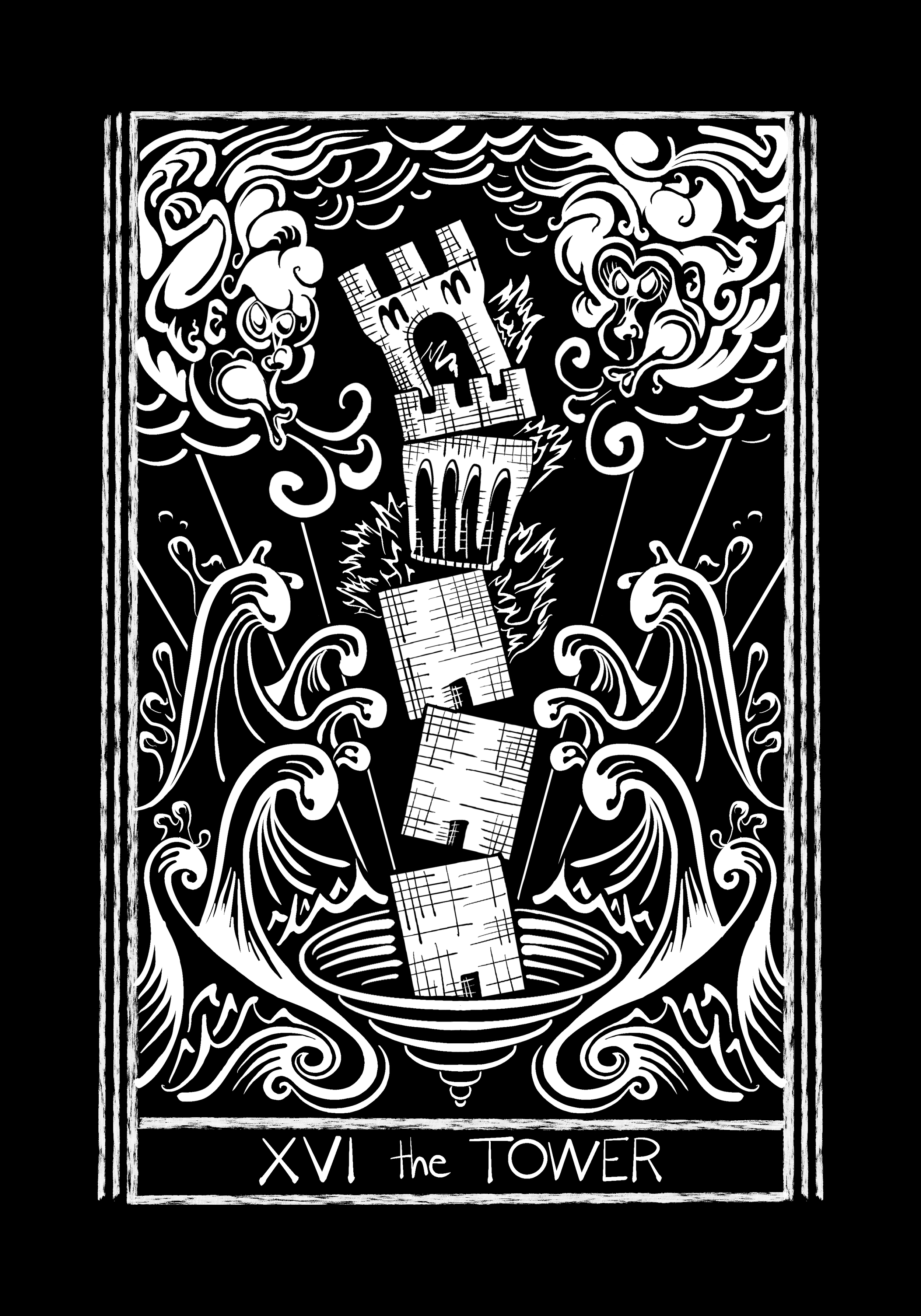
The Tower is a card of collapse, revelation, and sudden transformation. Structures we believed permanent are shattered, forcing us to confront truths we may have avoided or denied. Though frightening and often painful, the destruction of the Tower clears space for something more honest and resilient to emerge. What falls apart was never as stable as it appeared.
This card is represented by Pilgrim Monument, the immense granite tower rising above Provincetown’s otherwise modest skyline. Constructed between 1907 and 1910 as a prideful exertion of Provincetown’s historical significance, the monument commemorates the Mayflower’s arrival and the signing of the Mayflower Compact. At over 250 feet tall, its Eye-of-Sauron style dominance endures as a topic of aesthetic controversy.
Like the Tower itself, the monument embodies contradiction. It is both a beloved landmark and looming reminder of colonial expansion and its lasting consequences. Its imposing presence asks us to consider which histories are celebrated, which are obscured, and what foundations our communities are truly built upon. The Tower reminds us that reckoning with uncomfortable truths is often necessary before meaningful transformation can occur.
XVII
The Star
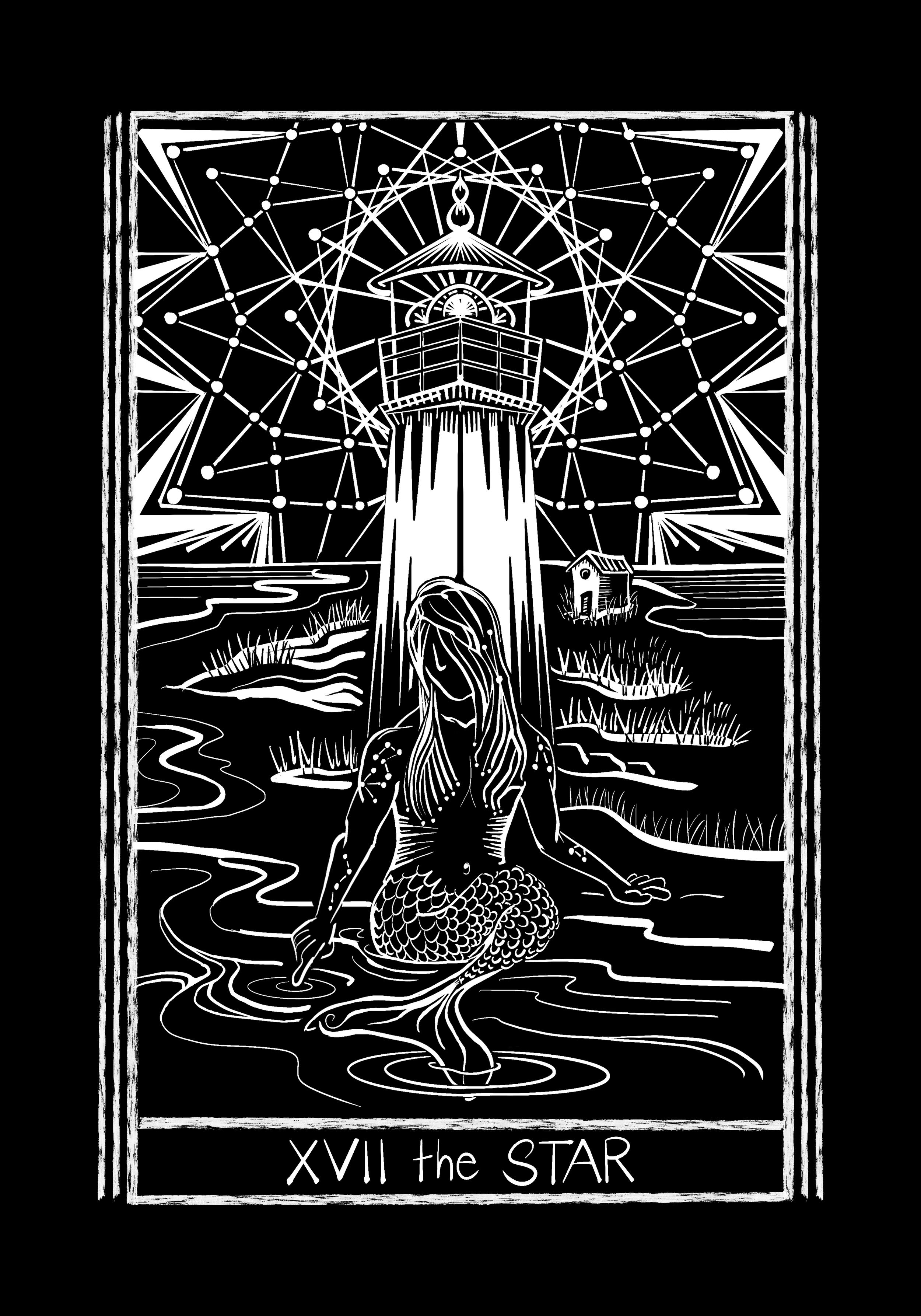
The Star arrives after the destruction of the Tower as a card of healing, clarity, and spiritual renewal. It reminds us that even after profound upheaval, hope remains. This card speaks to inspiration, faith, and the quiet certainty that we are capable of rebuilding ourselves in greater alignment with who we truly are. The Star is gentle but powerful, offering peace, purpose, and the belief that new possibilities still await us.
Traditionally depicted with one foot on land and one in water, this deck’s Star appears as a nonbinary mer-person, a figure embodying fluidity, resilience, and self-realization. Their existence bridges worlds and identities with grace hard-won through survival. Behind them rises Long Point Lighthouse, standing at the farthest reach of Cape Cod’s spiraling shoreline.
For generations, the lighthouses of Cape Cod have guided travelers safely through darkness and uncertainty. Crowned in constellations, Long Point becomes both beacon and cosmic compass, symbolizing the enduring human desire to navigate toward meaning, freedom, and possibility. The Star reminds us that even after losing our way, light still exists to guide us forward.
XVIII
The Moon
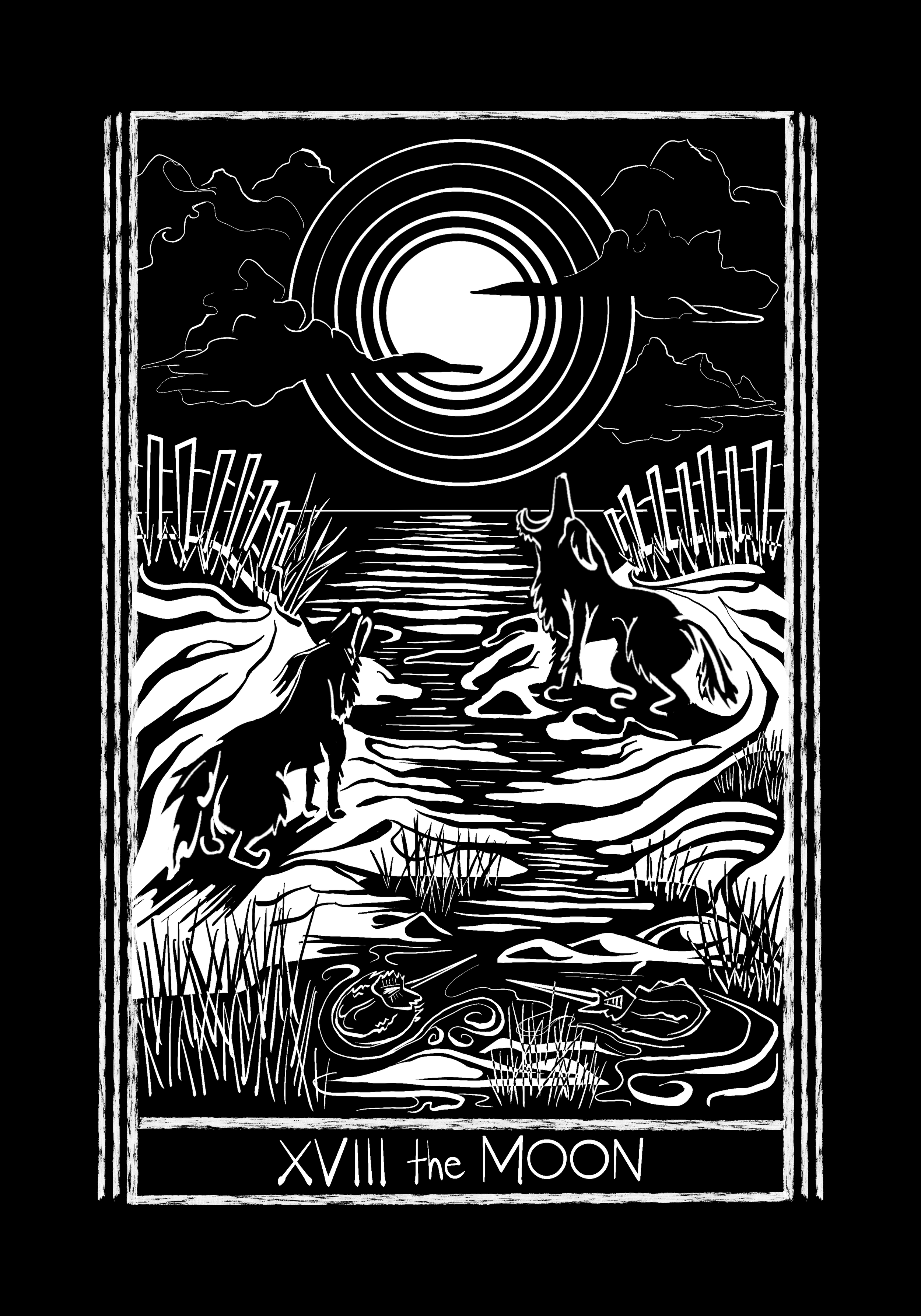
The Moon is a card of uncertainty, dreams, fear, and hidden truths rising to the surface. Beneath its glow, intuition becomes more reliable than logic, and the boundary between reality and projection begins to blur. This card asks us to confront the fantasies, anxieties, and unresolved emotions that shape our perceptions from beneath the conscious mind.
In Provincetown, coyotes have become an increasingly common presence since arriving on Cape Cod in the twentieth century. Their eerie howls echo across the dunes, lending the Outer Cape an atmosphere that feels ancient, uncanny, and untamed. Long associated with the archetype of the Trickster, the coyote embodies the Moon’s unstable terrain of illusion, instinct, and uncertainty.
In the foreground are horseshoe crabs, prehistoric creatures with blood the color of the sea, emerging from the depths like remnants of another world. Their presence suggests hidden things rising into view: buried fears, primal memory, and truths waiting beneath the surface of consciousness. The Moon reminds us that not everything revealed in darkness is false, but neither is everything trustworthy.
XXI
The World.
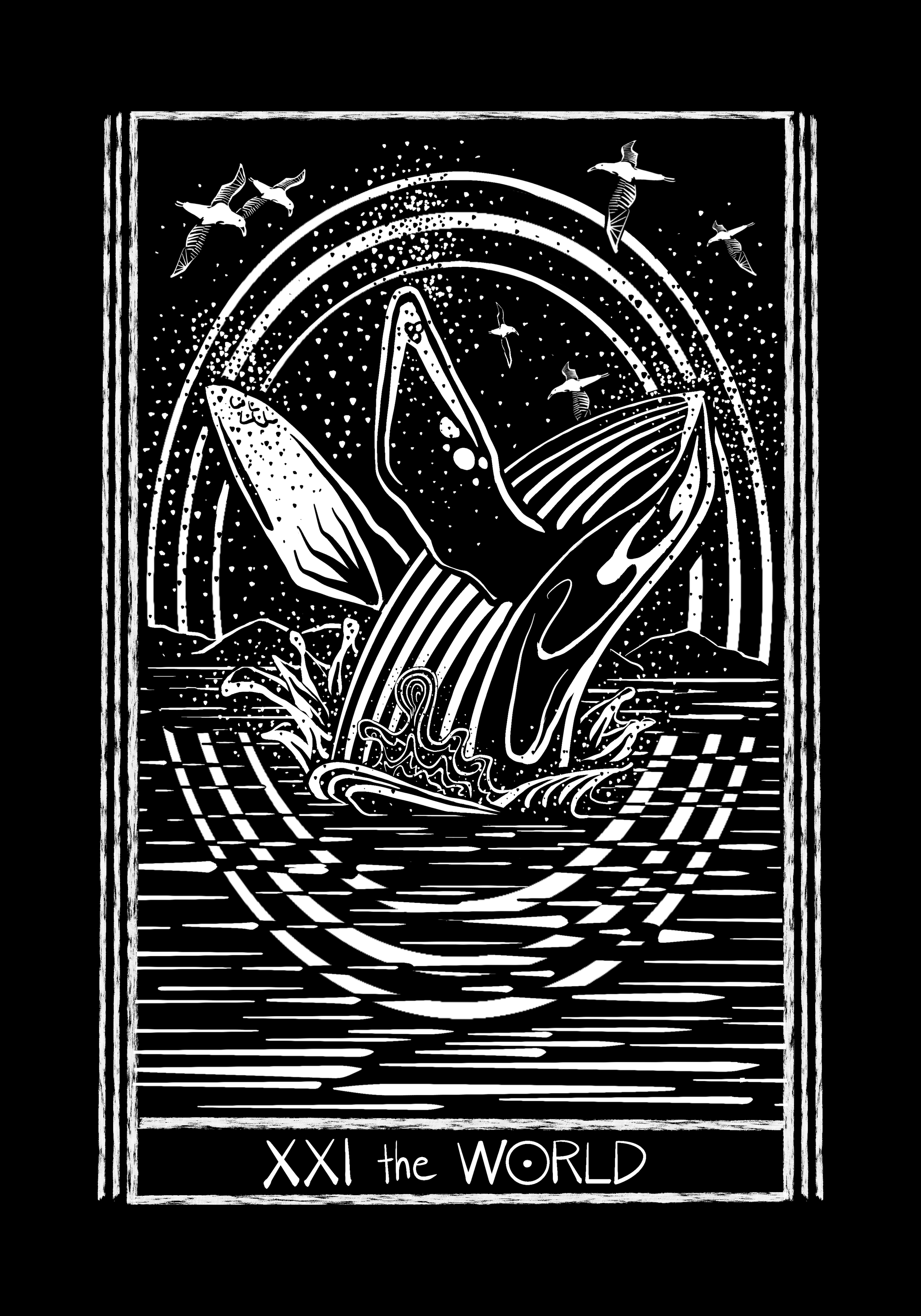
The World represents culmination, integration, and the profound satisfaction of reaching the end of a long journey. Here, the lessons of every triumph, failure, heartbreak, and transformation come together into a fuller understanding of the self. This card invites reflection, gratitude, and celebration before the next cycle begins anew.
This card honors the whales of Cape Cod, whose presence has shaped the history, economy, and mythology of Provincetown for centuries. Though commercial whaling once brought these creatures close to destruction, the whales endure, returning season after season to waters they have inhabited far longer than humans. Around the whale appears a reflected rainbow, symbolizing the eternal cycle of endings becoming beginnings.
Through every cycle of prosperity, collapse, reinvention, and renewal, the whales remind us we are part of something vast and enduring beyond ourselves. The World asks us to celebrate not only what we have achieved, but the simple miracle that we continue onward at all.